Source Agricultural Plunger Pump for Irrigation, Farming, and Water Transfer
Compare 30 Agricultural Plunger Pump listings with varying drive modes, cylinder counts, and power sources. Buyers can evaluate automatic and hydraulic options for irrigation, farming, and water transfer applications directly from Chinese manufacturers.
Key considerations
Products List


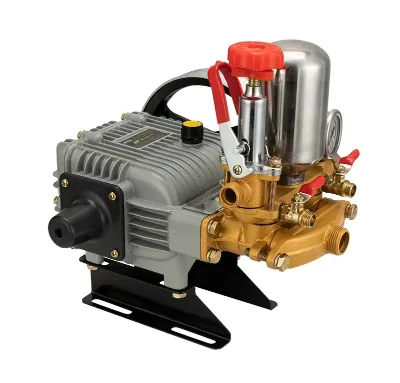
An1712e Agricultural High Pressure Plunger Pump for Farm Sprayer Equipment
$80.90 - $82.10
MOQ: 100 Pieces


$10000.00 - $40000.00
MOQ: 1 Sets

$10000.00 - $40000.00
MOQ: 1 Sets


Comprehensive Sourcing Guide
Strategic Sourcing Guide for Agricultural Plunger Pumps
Understanding the Technical Landscape of Plunger Pump Variants
The agricultural sector relies heavily on fluid transfer systems that can withstand demanding operational environments. When sourcing agricultural plunger pumps, buyers must first navigate a complex landscape of mechanical configurations and drive mechanisms. The available market data indicates a diverse array of structural designs, ranging from axial to radial plunger pumps. Buyers will encounter units described as having an "Axial Plunger Pump" structure, which typically offers high efficiency for high-pressure applications, as well as "Radial Plunger Pump" variants that may be suited for specific flow dynamics.
A critical distinction in this category is the drive mode. The observed product attributes reveal a split between "Hydraulic Driven Reciprocating Pump" systems and "Mechanically Driven Pump" units. Furthermore, specific entries note "Steam Driven Reciprocating Pump" capabilities, suggesting versatility in power sources depending on the farm's infrastructure. The power source itself is another variable; while "Electric" power is a common standard, "Hydraulic" power is also explicitly listed as a configuration. This variance means that a single procurement strategy cannot cover all agricultural needs. A buyer must determine whether the application requires an electric start-up system, often paired with an "Electric Pump" designation, or a hydraulic drive system integrated into a larger machinery setup.
The internal architecture of these pumps further dictates their suitability. Observations highlight "Straight Shaft Swashplate Piston Type" configurations, which can be "Self-Absorbing" or designed for "Pressureoil" applications. The cylinder count is another pivotal specification, with options ranging from "Single Cylinder" to "Multi Cylinder" setups. Multi-cylinder units generally provide smoother flow and higher volume, which is often preferred for large-scale irrigation, whereas single-cylinder models might be sufficient for localized spraying or smaller farm operations. The pump shaft position is also a technical differentiator, with "Horizontal" positioning being a noted attribute, which influences the physical footprint and installation requirements on a tractor or irrigation rig.
Compliance and Certification Verification Protocols
In the realm of agricultural machinery, compliance is not merely a formality but a prerequisite for market access and operational safety. The supplied product data explicitly references "CE" certification and "CE SONCAP" standards. These designations are critical indicators that the equipment meets specific safety and performance benchmarks required in certain international markets. The "CE" mark generally signifies conformity with health, safety, and environmental protection standards for products sold within the European Economic Area, while "SONCAP" relates to Nigerian standards, indicating the product's eligibility for export to that specific region.
However, buyers must exercise caution when interpreting these certifications. The data lists "CE" as a high-confidence fact, yet it also includes a low-confidence background reference to "ISO 9001." Buyers should not assume that every listed product automatically possesses ISO 9001 certification based on this background note. Instead, the procurement strategy must involve direct verification of the specific manufacturer's quality management system. The presence of a "CE" mark on a product listing is a strong signal, but it should be cross-referenced with the actual documentation provided by the supplier.
Furthermore, the "prod_standard" field in the data shows entries like "302035" and "352933," which appear to be dimensional codes or packaging standards rather than regulatory certifications. This ambiguity underscores the need for buyers to distinguish between physical specifications and regulatory compliance. When evaluating a supplier, the procurement team must request valid certificates of conformity for the specific model number, such as "MW-22M-1" or "AN1712E," rather than relying on general category claims. The origin of the product, often listed as "Taizhou, China" or "Zhejiang, China," does not inherently guarantee compliance; the certification status must be verified on a per-unit basis.
Cost Drivers and Pricing Structure Analysis
The financial aspect of sourcing agricultural plunger pumps is influenced by a wide range of factors, resulting in a significant variance in observed listed prices. The market data indicates a price range spanning from $0.36 to $40,000. This extreme disparity suggests that the category encompasses everything from small, auxiliary components or accessories to large, industrial-grade complete pump assemblies. A buyer must carefully align their budget with the specific technical requirements of their operation to avoid overspending on unnecessary features or under-specifying critical components.
Several key drivers contribute to this cost volatility. First, the complexity of the drive mechanism plays a substantial role. "Hydraulic Driven" systems and "Steam Driven" units often command higher prices due to the intricate engineering required to integrate these power sources compared to standard "Electric" or "Mechanically Driven" pumps. Second, the material composition affects cost. While some units feature an "Iron" outlet material, which is durable but potentially heavier, others may utilize different alloys or composites that influence the final price. The "Condition" of the product is also a factor; the data specifies "New" as a standard attribute, implying that refurbished or used units might exist in the market at lower price points, though they are not explicitly detailed in the high-confidence facts.
Packaging and logistics also impact the total cost of ownership. The data lists various packing methods, including "Standard Export Carton," "Wooden Box," "Paper Box," and "Foam Pad & Poly Bag & Export Carton." The choice of packaging reflects the value and fragility of the unit. A "Wooden Box" is typically more expensive to produce and ship than a "Paper Box," but it offers superior protection for heavy machinery. Additionally, the Minimum Order Quantity (MOQ) ranges from 1 to 500 units. Buyers purchasing small quantities may face higher per-unit costs, whereas those capable of meeting a higher MOQ might negotiate better pricing tiers. The "1CTN: 500PCS" attribute suggests that some items are sold in bulk cartons, which could be a cost-saving strategy for large agricultural cooperatives.
Typical Applications and Operational Scenarios
The versatility of agricultural plunger pumps allows them to serve a broad spectrum of applications within the farming ecosystem. The observed attributes provide clues regarding their intended use cases. For instance, the mention of "Liquid Contained: Disinfector, Medicine" suggests that these pumps are suitable for agricultural chemical applications, such as spraying disinfectants or applying medicinal treatments to livestock and crops. This capability is essential for modern farming practices that prioritize biosecurity and crop health.
The performance specifications further define the operational scenarios. The "Max.Head" is listed as "<10m," indicating that certain models are designed for low-to-medium head applications, suitable for moving water or chemicals over short distances or against low resistance. Conversely, the "Max.Capacity" of "<50 L/min" suggests a focus on moderate flow rates, which are ideal for precision irrigation or targeted spraying rather than massive water diversion projects. The "Automatic Pump" performance attribute and "Automatic" method type imply that these units can be integrated into automated systems, reducing the need for manual intervention and increasing efficiency in large-scale operations.
The structural types also hint at specific applications. "Radial Plunger Pump" models with "Axial Flow" characteristics might be optimized for specific fluid dynamics required in hydroponic systems or specialized irrigation networks. The "Self-Absorbing" nature of the "Straight Shaft Swashplate Piston Type" is particularly valuable for applications where the pump needs to draw fluid from a source below the pump level, such as sump tanks or reservoirs, without requiring a separate priming system. The "V Type" structure and "Horizontal" shaft position offer design flexibility for mounting on various agricultural vehicles or stationary platforms.
Supplier Evaluation and Origin Considerations
When evaluating potential suppliers for agricultural plunger pumps, the geographic origin of the manufacturing facility is a significant data point. The supplied facts identify "Taizhou, China" and "Zhejiang, China" as primary production locations. These regions are known for their robust manufacturing ecosystems, particularly in the machinery and pump sectors. However, the presence of a specific location does not guarantee quality; it merely indicates the supply chain's starting point. Buyers should investigate the specific factory's capacity and reputation within these regions.
The "Customization: Available" attribute is a crucial factor in supplier selection. It indicates that manufacturers are willing to adapt products to meet specific agricultural needs, such as modifying the "prod_model" or adjusting the "prod_packing" to suit local logistics. This flexibility is highly valuable for buyers with unique operational requirements. When assessing a supplier, buyers should inquire about the extent of these customization options and the lead times associated with them.
The "Condition: New" attribute confirms that the market primarily deals in brand-new equipment, which simplifies the evaluation process regarding wear and tear. However, buyers must still verify the "prod_packing" standards to ensure the product arrives in pristine condition. The variety of packing options, from "Standard Export Carton" to "Wooden Box," suggests that suppliers have different packaging protocols. A supplier that offers "Foam Pad & Poly Bag & Export Carton" demonstrates a higher level of care for product protection, which can be a proxy for overall quality control standards.
Quality Control and Long-Term Procurement Strategy
Ensuring the long-term reliability of agricultural plunger pumps requires a robust quality control strategy. The "Controller: Without Controller" and "Cable: Without Cable" attributes highlight that some units are sold as bare mechanical assemblies, requiring the buyer to source and integrate control systems separately. This separation places a higher burden on the buyer to ensure compatibility and system integration. For these units, quality control must extend beyond the pump itself to the entire system design.
For units that are more integrated, the "Automatic" nature of the pump suggests a need for rigorous testing of the automation components. Buyers should request test results or performance data that validate the "Automatic Pump" functionality under load. The "13.8" standard and model number entries suggest that there are specific technical benchmarks that products must meet. While the exact nature of the "13.8" standard is not fully defined in the high-confidence facts, it represents a specific technical parameter that buyers should verify with the supplier.
Long-term procurement considerations also involve the availability of spare parts and maintenance support. The "Iron" outlet material indicates a focus on durability, but iron components can be susceptible to corrosion if not properly treated. Buyers should inquire about surface treatments or coatings, noting that "Paint" is listed as a coating process. This coating is essential for protecting the pump from the harsh environments typical of agricultural settings. Additionally, the "Standard Export Carton" and "Paper Box" packing options suggest that the products are designed for international shipping, but buyers should ensure that the packaging is sufficient to protect the pump during transit and storage.
Comparative Analysis of Key Product Attributes
To facilitate a clearer understanding of the available options, the following table summarizes the key technical and logistical attributes observed in the market data. This comparison aids buyers in matching specific product configurations to their operational needs.
| Attribute Category | Observed Variants | Implication for Procurement |
|---|---|---|
| Drive Mode | Hydraulic Driven, Mechanically Driven, Steam Driven | Select based on available power source on the farm; Hydraulic for high power, Mechanical for simplicity. |
| Structure Type | Axial Plunger, Radial Plunger, V Type | Axial for high pressure; Radial for specific flow dynamics; V Type for compact mounting. |
| Power Source | Electric, Hydraulic | Electric for grid-connected farms; Hydraulic for integration with tractor PTOs or hydraulic systems. |
| Cylinder Count | Single Cylinder, Multi Cylinder | Single for low volume; Multi for high volume and smoother flow. |
| Packing Standard | Standard Export Carton, Wooden Box, Paper Box | Wooden Box for heavy/fragile units; Carton for standard shipping; Paper for lighter components. |
| Origin Location | Taizhou, China; Zhejiang, China | Both are major manufacturing hubs; verify specific factory certifications regardless of region. |
| Certification | CE, CE SONCAP | Essential for export compliance; verify specific model certification status. |
| Customization | Available | High value for unique requirements; confirm lead times for custom orders. |
This comparative view highlights the diversity within the Agricultural Plunger Pump market. Buyers must carefully weigh these attributes against their specific operational constraints. The presence of "Without Controller" and "Without Cable" options indicates that some procurement strategies may need to include separate purchases for control systems, which adds complexity to the total cost and integration timeline. Conversely, the "Automatic" performance attribute suggests that fully integrated solutions are available for those seeking streamlined operations.
Final Procurement Recommendations
In conclusion, sourcing agricultural plunger pumps requires a meticulous approach that balances technical specifications, compliance requirements, and cost considerations. The market offers a wide range of options, from simple mechanical units to complex hydraulic systems, each with distinct advantages depending on the application. Buyers should prioritize verifying certifications like "CE" and "CE SONCAP" directly with the supplier, rather than relying on general category claims. The price range of $0.36 to $40,000 necessitates a clear definition of requirements to avoid unnecessary expenditure.
Furthermore, the availability of customization and the variety of packing standards indicate a flexible market that can accommodate diverse needs. However, the lack of explicit controller and cable components in some models requires careful system planning. By focusing on the specific drive modes, structural types, and power sources that align with their farm's infrastructure, buyers can secure reliable equipment that meets their agricultural demands. Long-term success depends on selecting suppliers who can provide not just the pump, but also the necessary support, documentation, and quality assurance to ensure the equipment performs reliably over its intended lifespan.
FAQs
What certifications are available for these pumps?
CE certification is available for these agricultural plunger pumps. Some models also meet CE SONCAP standards for specific regional compliance. Buyers should verify specific certificates for each model number before procurement.
Can I customize the product specifications?
Yes, customization is available for these units. Manufacturers can adapt models like MW-22M-1 to meet specific agricultural needs. Buyers should confirm the extent of customization options and associated lead times with the supplier.
Which drive modes are offered for these pumps?
Available drive modes include hydraulic, mechanically driven, and steam driven reciprocating options. Electric pumps are also listed for specific start-up requirements. The choice depends on the farm's existing infrastructure and power availability.
How is the product packed for export?
Packaging varies by model and includes standard export cartons, wooden boxes, paper boxes, or foam pads with poly bags. The selection depends on the unit's fragility and value. Buyers should specify packaging preferences during the order process.
What is the origin location of these pumps?
Products originate from Taizhou, China, and Zhejiang, China. These regions are known for manufacturing machinery. Buyers must verify the specific factory location for each order rather than assuming a single origin for all units.
What is the maximum capacity of these pumps?
The maximum capacity is listed as less than 50 liters per minute. This suits moderate flow rates for precision irrigation or targeted spraying. Buyers should confirm specific flow rates for their intended application against this limit.
Are these pumps suitable for liquid disinfectants?
Yes, these pumps can contain disinfectants and medicines. This makes them suitable for agricultural chemical applications and livestock treatments. Ensure the pump material, such as iron outlets, is compatible with the specific liquid being handled.